


The Permanence of Value
When one is entrusted with the care of capital, it is not fashion or momentum that ought to guide our hand, but the search for durability. My task is not to predict the unpredictable, but to discern those rare enterprises whose character, people, and place in the world may stand the test of time.
As I have written before, Japan remains fertile ground for such inquiry. Its soil harbors businesses largely ignored by the modern capital markets, run by management that still thinks in decades, not quarters. Many are conservatively financed, family-influenced, and built around useful products or services that do not depend on the whims of government subsidy or the glamour of technology hype.
In What Japan’s Market Overlooks Part I/Part II, I shared a handful of such companies. They remain attractive, but in the meantime, I have become acquainted with five others. They are not the darlings of the stock market. They are not large. They will not excite those who measure success in terms of next quarter’s earnings per share. But they carry the marks of permanence that I hold in esteem.
Toumei Co., Ltd. (4439)
Three F Co., Ltd. (7544)
NIFTY Lifestyle Co. Ltd (4262)
Yokota Manufacturing (6248)
Daitron Co., Ltd. (7609)
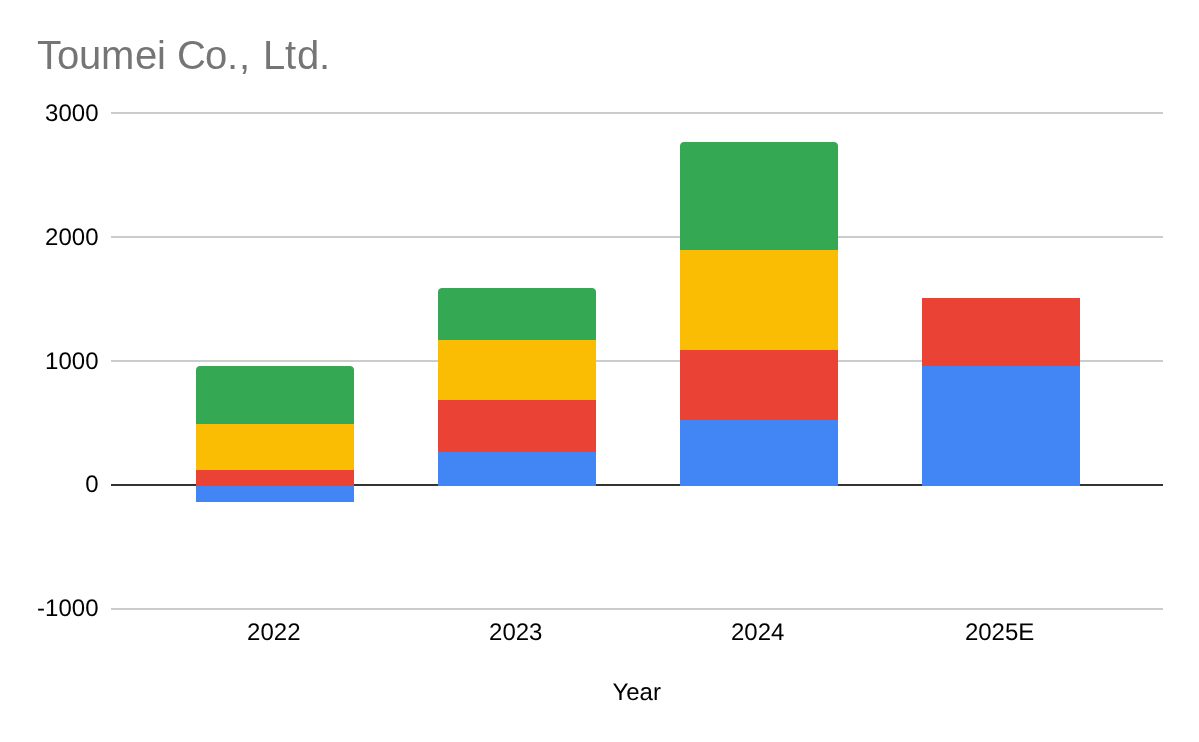
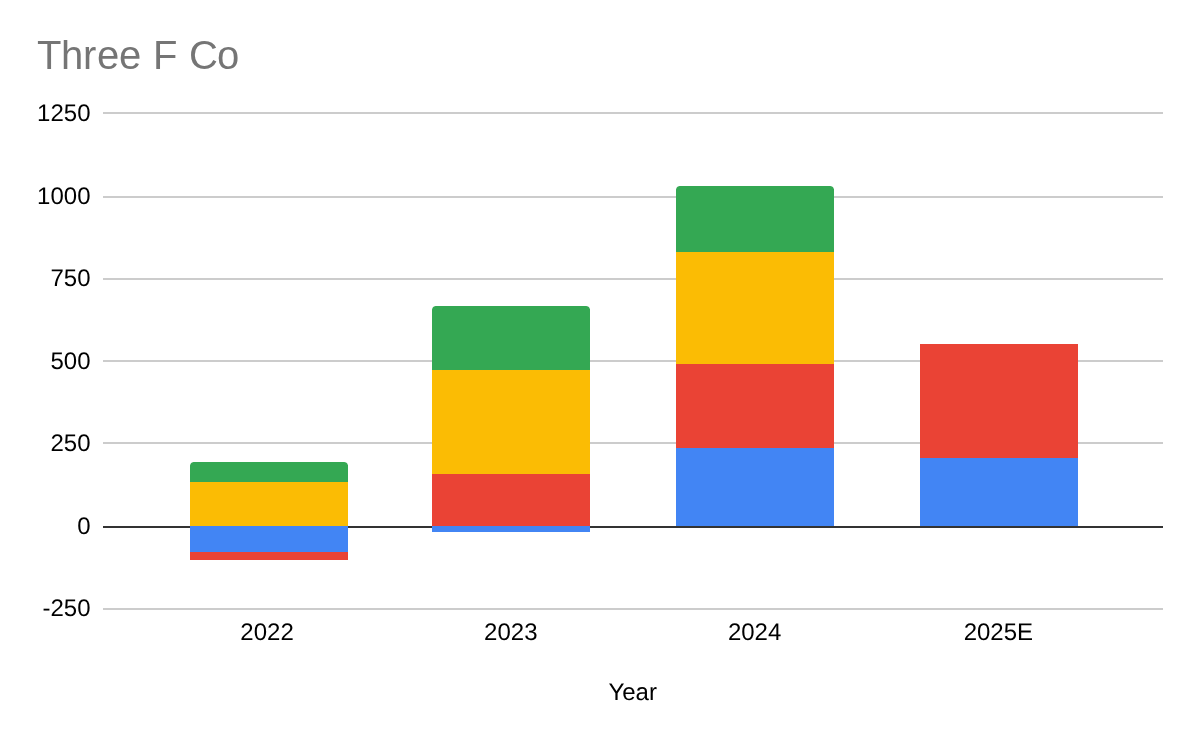
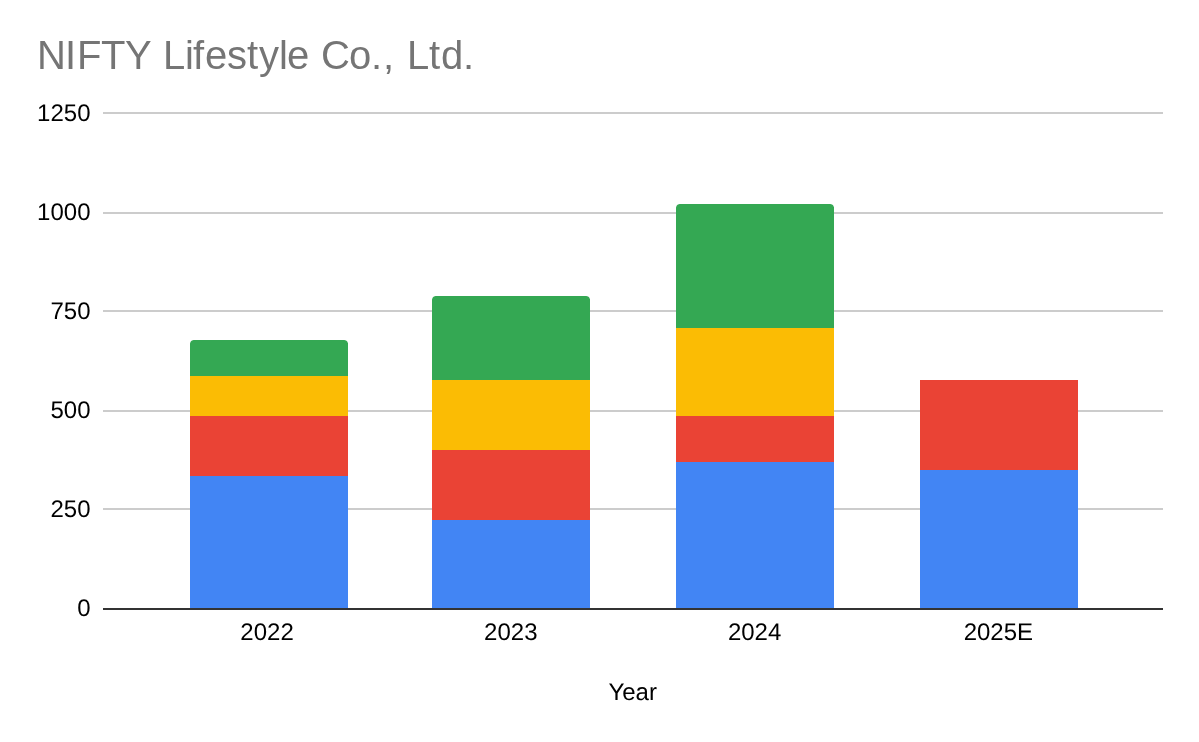
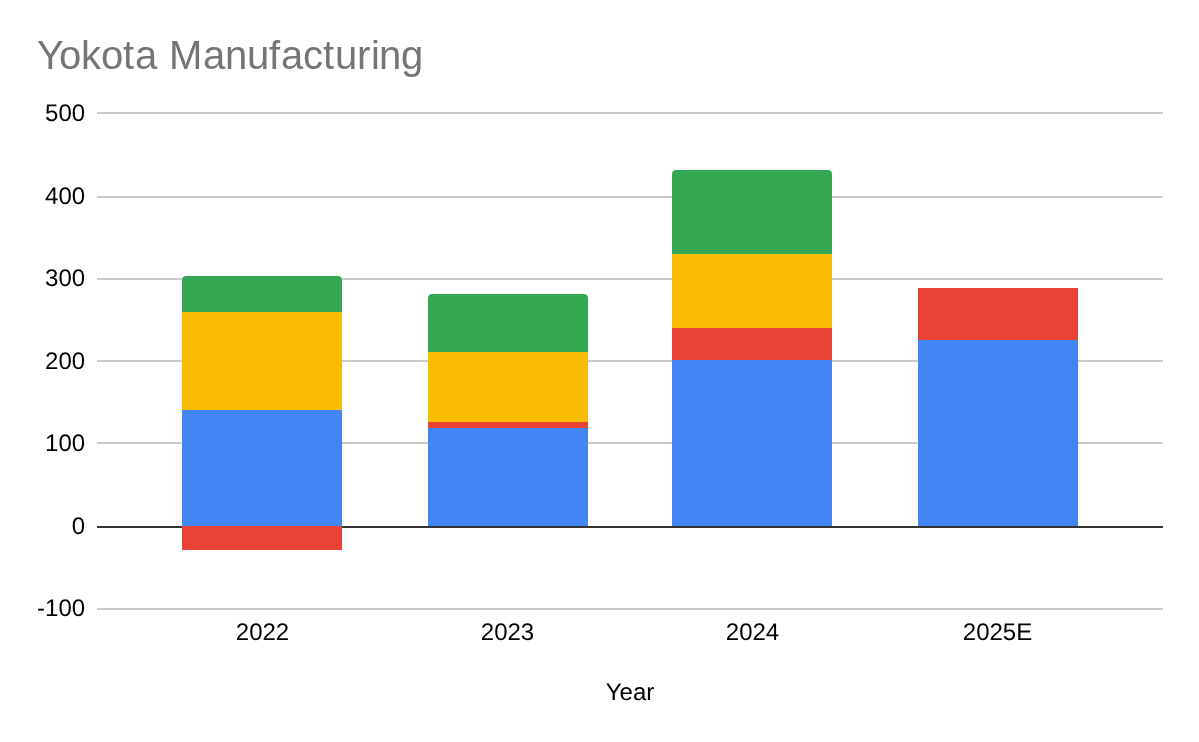
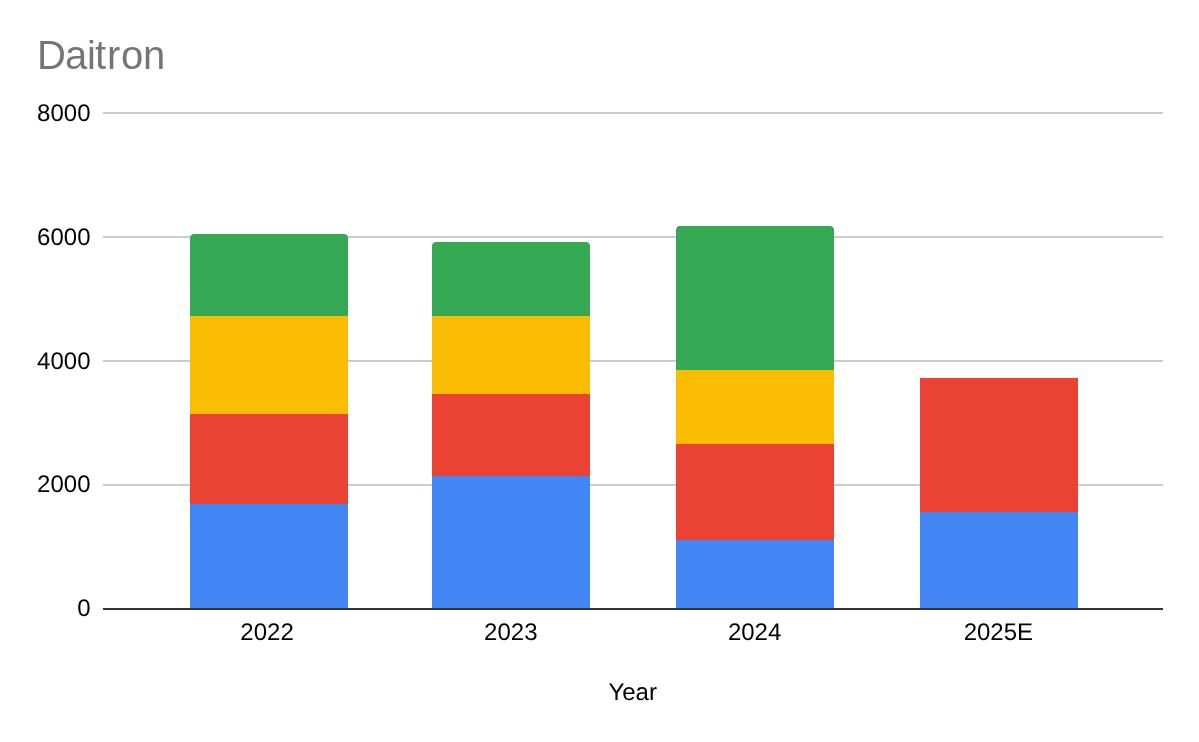
Each company is presented in a brief, straightforward manner. I focus on the investment essentials: history, business model, recent financials, capital allocation, relative valuation, targets, current opportunity, and key shareholders. A single chart - EBIT (¥ million) over the past three years - accompanies each company profile.
Toumei Co., Ltd. (4439)
Enterprise Value: $158.91M
LTM EV/EBIT: 7.56
Last 3-Yr Rev. CAGR: 23,6%
Last 3-Yr EPS CAGR: 77,1%
LTM ROIC: 29,0%
Toumei is an unassuming business. Founded in 1997 to provide communication line services, it now supplies fiber-optic access and electricity to Japan’s smallest enterprises. It is not glamorous. Yet beneath its modest façade lies a record of steady growth, guided by sobriety in both operations and finance. Cash and short-term investments exceed liabilities, and the preponderance of its revenues is recurring in nature.
The company’s business model is straightforward: it offers one-stop solutions for the office. This is organized into three segments. The Office Hikari 119 Business provides fiber-optic Internet service to SMEs. The Office Denki 119 Business provides electricity. The Office Solutions Business, still smaller in contribution, encompasses a variety of services—ranging from information terminal support, web solutions, and insurance, to solar systems and batteries. Each of these areas is designed to remove complexity from the smallest enterprises, those often neglected by larger competitors.
The company’s fiscal third-quarter results illustrate the fruits of such a model. Operating profit increased 52.8% year-over-year. Net income attributable to the parent company grew 102.1%. The largest contributor remains the electricity business, though the Office Solutions segment is growing rapidly too—47.2% year-over-year—and now accounts for roughly 9% of profits.
What is striking is not merely growth, but the manner in which it is financed. The company carries itself conservatively, with liquid assets in excess of all liabilities. Its dividend policy is modest: a payout ratio of at least 10%, currently yielding 1.1%. In March 2024, Toumei made two acquisitions—Kinki Denko and Ecological Electrical Service—each aligned with its core business. It has signaled a willingness to continue such measured expansion.
On a comparative basis, valuation remains unassuming. With a last-twelve-month EV/EBIT of 7.56, Toumei trades at a discount to many listed peers, some commanding multiples as high as 22.83. Its niche is deliberate: it serves the smallest firms, those with fewer than 5–20 employees. Apart from Hikari Tshushin, few competitors focus here, for the perceived potential revenue per client is too small to interest them.
The results of such focus are evident. In 2023, Toumei exceeded forecasts, achieving 121.2% of the target net income to owners of the parent. Its medium-term plan, “NEXT GROWTH 2027,” calls for an ambitious earnings per share growth rate of 28% annually over the next three years, relying on up-selling, new service introductions, and the broadening of its customer base.
The opportunity arises in part from the deregulation of Japan’s energy market, but also from the quality of Toumei’s revenues. Nearly 90% of its sales are recurring, forming a stable foundation for expansion. The fiber-optic business, in particular, has benefited from effective digital marketing and the development of agency channels. Recruitment of over 100 graduates and mid-career professionals further underscores the company’s preparation for continued growth.
Ownership remains anchored by its founder. Chairman Fumihiko Yamamoto retains 35% of the shares, even after transferring a 7.31% stake to Cereso Co., Ltd. Other significant holders include Hikari (7.33%) and FT Group (8.01%), itself majority-owned by Hikari Tshushin. President and CEO Naoto Hibino, who joined the company in 2000 as a branch manager, now leads the enterprise. Two other directors, each having served since the early 2000s, reinforce the sense of continuity and stability at the helm.
Three F Co., Ltd. (7544)
Enterprise Value: $6.4M
LTM EV/EBIT: 0.87
Last 3-Yr Rev. CAGR: 5,3%
Last 3-Yr EBITDA CAGR: 56.4%
ROIC: 25.8%
Three F Co., Ltd. was established in 1981 in Konan Ward, Yokohama, to manage convenience stores and guide franchise operators. As of February 2025, the company manages 332 stores across Tokyo, Kanagawa, Chiba, and Saitama. It is not the largest operator in Japan, nor does it seek to be. Its focus remains more narrow, more deliberate.
At its core, Three F is a convenience store operator. It provides franchisees with support, product supply, and operating guidance. Its product portfolio is distinct, even idiosyncratic, compared to its larger competitors. Chilled bento boxes, Mochi Ponyo, yakitori skewers, and other specialties serve as hallmarks of its offering. It also operates Gooz, a next-generation format that places emphasis on fresh food and a different customer experience. Where the industry’s giants seek ubiquity, Three F looks for distinction.
Recent results underscore the strength of this business model. For the first quarter of the fiscal year ending February 2026, the company reported robust growth. Existing store sales rose 5.0% year-on-year, the 35th consecutive month of positive comparisons. Operating revenue increased 7.0%, operating profit surged 37.7%, and net income attributable to shareholders rose 38.1%. Such performance stems from a strategy that adapts to shifting consumer behavior, notably through the Lawson-Three F alliance and the Gooz concept.
Capital allocation is simple. Dividends are the chosen means of returning cash to shareholders. The company declares an annual dividend of 12 JPY, a yield of 2.28%. There is no emphasis on buybacks or acquisitive expansion. Its manner is conservative and deliberate.
Competition is formidable. Seven & i Holdings (7-Eleven), FamilyMart, and Lawson dominate the landscape. Yet Three F competes well enough: its average daily sales per store exceed those of almost all major chains. More striking is its valuation. While competitors command EV/EBIT multiples near 17, Three F trades at a significant discount, despite its operational progress.
The group has articulated a medium- to long-term plan. By 2027, it aims to achieve operating profit of at least one billion yen and net income of at least 300 million yen. Such targets imply a mere 1.9% CAGR in net income, a pace that, given current momentum, is likely to be surpassed.
The investment case rests less on explosive growth than on recognition. Franchisee revenues are growing, aided by joint promotions with Lawson, the adoption of AI-powered ordering systems, and the expansion of Gooz, a format that bears resemblance to Pret in London in its emphasis on ready-to-eat fresh food. Historically, Three F has demonstrated its capacity to scale if a concept works; between 1992 and 1995, store count doubled from 200 to 400. Furthermore, the cessation of brand-conversion expenses has lifted operating profit, a development the market seems yet to acknowledge.
Ownership, too, speaks to continuity. JMK Mizuho Co., Ltd. holds 35.06%. Hikari Tshushin owns 7.41%. Chairman Junji Kikuchi, in place since 2016, retains 6.31%. None have been sellers. The shareholder base is stable, the stewardship patient.
NIFTY Lifestyle Co. Ltd (4262)
Enterprise Value: $31.96M
LTM EV/EBIT: 4.24
Last 3-Yr Rev. CAGR: 22%
Last 3-Yr EPS CAGR: (4.4%)
ROIC: 18.7%
NIFTY Lifestyle Co., Ltd. is a young company by Japanese standards. Founded in 2018 and headquartered in Tokyo, it exists to provide behavioral support services that make life more convenient. It focuses on three areas where technology touches the daily lives of households and small businesses: PropTech, WellnessTech, and CrossTech. Though it operates as a subsidiary of NIFTY Corporation, it has quickly forged its own character.
The company’s offerings fall into two streams. Its platform services provide information search functions for properties, jobs, and even hot spring facilities. Its solution services provide digital transformation support to enterprises, such as optimizing data feeds for web advertisements or automating business processes. What differentiates the firm is the interplay of these domains: consumer-facing platforms that generate data and traffic, combined with B2B solutions that help other firms navigate their own transitions into the digital age.
The fiscal first quarter ending March 2026 marked a new record. Sales increased 27.3% to ¥1,227 million. Operating profit grew 93.3% to ¥226 million. Net income attributable to owners of the parent rose 203.1% to ¥142 million. Such growth was led by the LIFE STYLE business, and especially by “Nifty Real Estate,” whose app saw a rise in downloads and referrals through improved user experience. At the same time, the company is fortifying its WORK STYLE domain, investing in talent and office space for long-term growth. Management has not revised full-year forecasts, preferring, perhaps, to let results speak in time.
Capital allocation is balanced between investment and return. In May 2024, the company merged with Doors Co. for 1.7 billion yen, valued at 1.7x sales or 10x EBIT. In 2023, it acquired GiRAFFE & Co., which had reported sales of ¥222 million. The dividend policy now targets a 50% payout ratio, with an estimated 2026 dividend of ¥54 per share, a yield of 3.5%. Share repurchases, though modest, are also undertaken.
Valuation is not excessive, though it sits in a varied landscape. Competitors in the broader technology and service sector range widely: YRGLM at 38x EV/EBIT, Zappallas at 24x, PR Times at 27x, while smaller peers such as Wantedly and GMO Media trade at 10.9x and 13x, respectively. NIFTY Lifestyle lies somewhere between—neither ignored nor exuberantly valued.
The company looks forward to a mid-term plan titled “XPANSION 2030.” It seeks to broaden its reach beyond LIFE STYLE into WORK STYLE, reflecting Japan’s “100-year life” era, where longevity will require new ways of working and living. Targets include an operating income CAGR of roughly 14.8% through 2030. Such ambition is not empty; the firm has a record of meeting its prior mid-term goals ahead of schedule.
The investment case rests not merely on growth, but on underappreciated qualities. Its LIFE STYLE business—particularly Nifty Real Estate—continues to expand through digital marketing and user referrals. Cross-selling, user engagement, and the shift toward consultation models foster long-term bonds with customers. Cash generation may also exceed reported earnings, suggesting understated profitability.
Ownership is concentrated. Fujitsu Cloud Technologies holds 65.14% of shares. Keiichiro Kinoshita owns 2.98%. Tomohiro Yoshida, who has raised his stake by more than 94% this year, now holds 2.22%. Taichi Yabu holds 0.8%. Such alignment, with insiders steadily increasing their stake, reinforces the sense of continuity.
Yokota Manufacturing (6248)
Enterprise Value: $8.69M
LTM EV/EBIT: 2.67
Last 3-Yr Rev. CAGR: 9.6%
Last 3-Yr EPS CAGR: 25.5%
ROIC: 16.9%
Yokota Manufacturing Co., Ltd. was founded in 1953 in Hiroshima. For over seventy years, it has remained dedicated to the craft of fluid control. Its work is not glamorous. It manufactures pumps and valves, provides installation services, and supports industries that demand reliability rather than spectacle.
The company’s expertise lies in specialty pumps and valves designed for difficult applications: self-priming, defoaming, degassing, non-water hammer check valves, and constant flow valves. These are solutions to particular problems. Its differentiation rests on in-house production of metallic materials, such as seawater-resistant stainless steel, which enables the company to build products for demanding environments. Over 200 patents, utility models, and trademarks attest to decades of invention. But the essence is not in patents or models: it is in the ability to serve with durable solutions that endure.
The most recent quarter, April through June 2025, showed improvement in profitability. Sales rose 6.4% year-on-year to ¥371 million. Operating income grew by 64.3% to ¥63 million. By category, pumps accounted for ¥161 million in revenue, valves for ¥70 million, and parts and services for ¥139 million. Pump orders rose 42.9%, while valve sales surged 79.1% despite weaker order inflows. Parts and services declined, but the company’s core, its pump and valve solutions, grew meaningfully.
Capital allocation reflects prudence. The company’s policy is to distribute about half of its earnings as dividends. For fiscal 2025, this meant an annual dividend of ¥30 per share. For fiscal 2026, management forecasts modest sales growth but expects lower profits, citing the variability inherent in its build-to-order business. They refrain from publishing mid-term plans, preferring not to make promises in the face of uncertain demand.
Valuation is modest. With a trailing EV/EBIT of 2.67, Yokota trades at a discount to peers such as Techno Smart (4.75x) and Maezawa Industries (5.24x). Yet its returns are not modest. The company sustains an ROE of 11.4%, a sign of efficiency born not of leverage, but of focus on higher-margin, proprietary solutions.
The investment case lies in what the market overlooks. Demand is rising in government, public works, and chemical industries. More importantly, Yokota is not a commodity manufacturer. It is a water solutions company. Its proprietary alloys, patented technologies, and niche positioning allow it to command margins and serve customers who require reliability over decades. New areas such as geothermal power offer opportunities for the future. Here is permanence in a world addicted to transience.
Stewardship is anchored in family and community. President Yoshiyuki Yokota leads, with Executive Director Hiroshi Watai and four long-serving directors beside him. Ownership remains aligned: the Yokota Association holds 32.67%, employees 6.35%, and Masako Yokota 5.76%. Long-term partners include Hikari Tsushin (7.07%) and Hiroshima Shinkin Bank (6.41%). Continuity of ownership and leadership underscores the firm’s culture of care.
Daitron Co., Ltd. (7609)
Enterprise Value: $180.8M
LTM EV/EBIT: 3.68
Last 3-Yr Rev. CAGR: 6.6%
Last 3-Yr EPS CAGR: 14.0%
ROIC: 22%
Daitron Co., Ltd. was founded in 1952 in Osaka. For over seventy years, it has occupied a modest but vital place in Japan’s industrial landscape, manufacturing and selling electronic devices, parts, and equipment. Its business is divided into three segments: domestic sales, domestic manufacturing, and overseas operations.
Daitron is distinctive because it operates as both a manufacturer and a trading company. It distributes electronic parts, semiconductors, embedded systems, power supplies, and imaging equipment. At the same time, it develops and manufactures its own products, including advanced equipment for industries such as semiconductors and flat-panel displays. This dual character allows it to meet customer needs responsively, while building its own technologies and intellectual property.
The company reported strong results for the six months ended June 30, 2025. Net sales rose 9.1% year-on-year to ¥48.9 billion. Operating income surged 40% to ¥3.7 billion, and ordinary income rose 29.2% to ¥3.65 billion. Net income attributable to owners of parent increased 35.6% to ¥2.55 billion, or ¥239.66 per share. Such growth is not a one-off. Over the last five years, earnings per share have compounded at roughly 20% per year.
Capital allocation reflects balance. The dividend payout ratio has been raised from 30% to 40%, with flexibility for share buybacks. The declared annual dividend of ¥90 per share, yielding 3.8%, reflects both growth and restraint. The company retains a significant portion of earnings to invest in its future: ¥1.5 billion for digital transformation initiatives, ¥1 billion for research and development, and ¥3.5 billion for new businesses and production capacity. Over the last decade, dividends have risen steadily, yet never at the expense of reinvestment.
On a valuation basis, Daitron is modestly priced. Its trailing EV/EBIT ratio of 3.68x stands at a discount to many peers in technology distribution and manufacturing, such as Tamura, Koa, Sun-Wa Technos, Kuroda, and Takachicho Koheki. This is despite achieving record-high sales and profits in fiscal 2024.
Management recognizes challenges. Domestic sales and manufacturing have reached a plateau, and overseas expansion has been slower than planned, constrained by supply chain disruptions and geopolitical uncertainty. Such realities may weigh on sentiment. Yet the company continues to build its intellectual capital, expanding its portfolio of patents and developing high-value products. It is investing in digital transformation, new businesses such as green facilities and batteries, and strengthening manufacturing systems across its factories. These are long-term commitments that may depress near-term earnings but sow the seeds of permanence.
The long-term vision (2030 VISION) is to surpass ¥100 billion in consolidated net sales. Such ambitions rest not on financial engineering, but on steady reinvestment in human capital, technology, and productive capacity.
Ownership reflects continuity and alignment. The Daitron Welfare Foundation holds 9.4%. Hikari has increased its stake by 25%, now owning 3.98%. Yasuyuki Omori owns 3.76%, while employees hold 3.18%, though they have reduced their stake somewhat.
These five companies share no common industry. One sells electricity to small offices, another serves late-night customers in Tokyo, another makes pumps for chemical plants, another facilitates real estate transactions, and another trades semiconductors. Yet they are united by qualities rare in today’s capital markets: sobriety of finance, durability of usefulness, continuity of stewardship, and independence of spirit.
They are not for those who seek to speculate. They may not even be for those who demand quick appreciation. But for the steward of capital who seeks permanence in a world built on sand, they represent an echo of older virtues.
As ever, I offer no advice, only observations. My own task is simply to search for what may endure.
If these businesses held your interest, you may find value in my earlier notes on Nulab, Intelligent Wave, and Genova - each chosen with the same attention to durability and utility. By subscribing, you’ll be among the first to read about the next set of Japanese enterprises I’m studying.
This is exactly where long-term value still hides: small, ignored, well-run Japanese businesses.
How would NIFTY Lifestyle Co. Ltd (4262) compare to Zigxen, which struggles in growing